"Blockchain comic" is one of those phrases that sounds like it should mean something obvious and doesn't. Ask five people and you will get five answers: a comic about crypto, a comic you buy with crypto, a comic that is an NFT, or a comic that only exists as a JPEG in somebody's wallet. All four are out there, and they are not the same thing at all. Here is the honest breakdown, and where The Rugpull Gang sits in it.
The three things people mean
1. A comic with blockchain as its subject. The chain is the setting and the source of the plot — rug pulls, wallet drains, anonymous founders, exchange collapses, the whole theatre of it. Nothing about the book itself is technically unusual. It is ink and paper telling a story that could only have happened in the last decade. This is the oldest and least exotic sense of the phrase, and it is the one that produces actual comics rather than actual press releases.
2. A comic that is minted as an NFT. Here the artefact is a token. You own a record on a chain that points at a file, and the file is the comic. This was the dominant meaning in 2021 and it has aged badly, because most of the projects that used it treated the comic as a reason to sell a token rather than the token as a way to sell a comic. When the market turned, a lot of buyers discovered that what they held was a link to a server somebody had stopped paying for.
3. A comic that uses the chain for ownership or provenance. The interesting middle ground. The book is a real book; the chain records who owns which numbered copy, who the creators were, and what edition it belongs to. It is closer to a certificate of authenticity than to a speculative asset. Done well it is invisible — you notice it when you resell, not when you read.
Why the distinction matters if you're buying
The question worth asking a project is simple: if the chain went away tomorrow, would I still have a comic?
If the answer is yes, you are buying a book and the blockchain is a feature. If the answer is no, you are buying an exposure, and the comic is the marketing. Neither is inherently dishonest, but they have wildly different failure modes. A book that arrives in a box keeps working during a bear market. A token pointing at an image on a host that lapses does not.
The second question: who made it, and can you find their work? Crypto-adjacent publishing produced an enormous amount of art that nobody signed, because a pseudonymous team is easier to walk away from. A named writer and a named illustrator with a body of work behind them is the single strongest signal that a project intends to deliver an actual comic.
What a blockchain comic reads like when it works
The genre has a real advantage that the token mechanics tend to bury: crypto is genuinely good material. It is a world of pseudonyms, sudden wealth, public ledgers that record every mistake permanently, and characters who are simultaneously the hero and the con. That is heist-story architecture. The transparency of a public chain does something noir has always wanted — everyone can see what happened, and nobody can prove who did it.
The comics that land treat the technology as setting rather than as subject. You do not need a lecture on consensus mechanisms; you need to understand that a character can vanish with everything and leave a permanent, public, useless record of doing so.
Where The Rugpull Gang fits
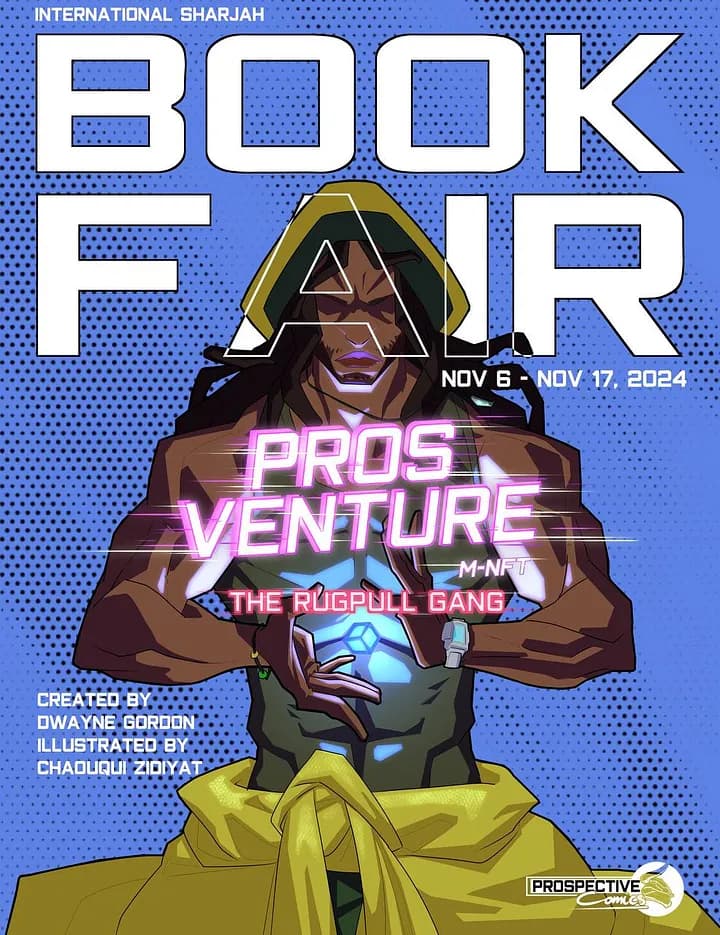
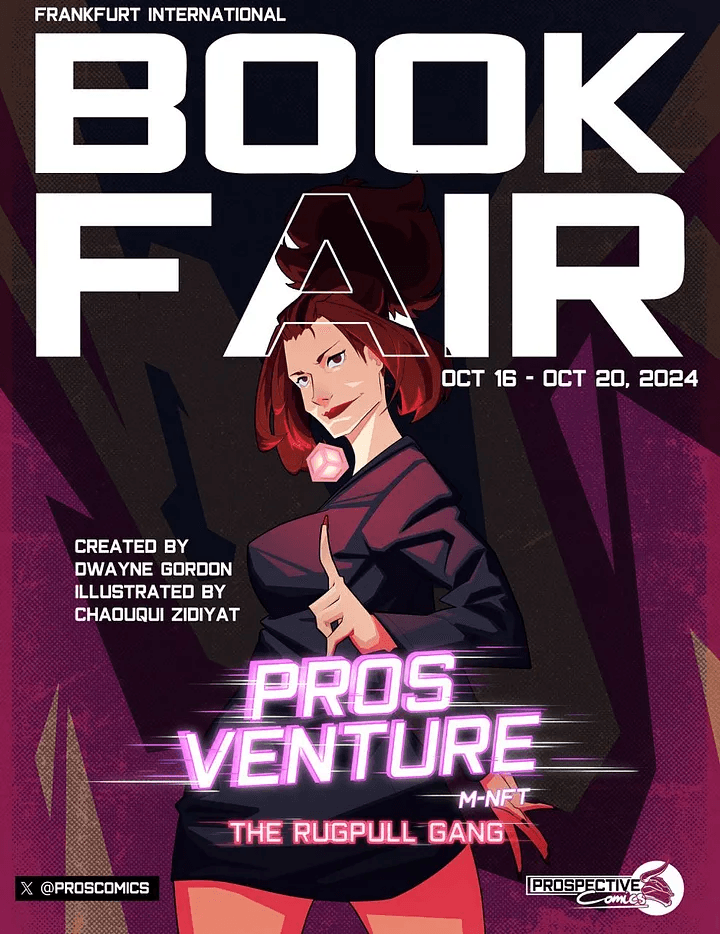
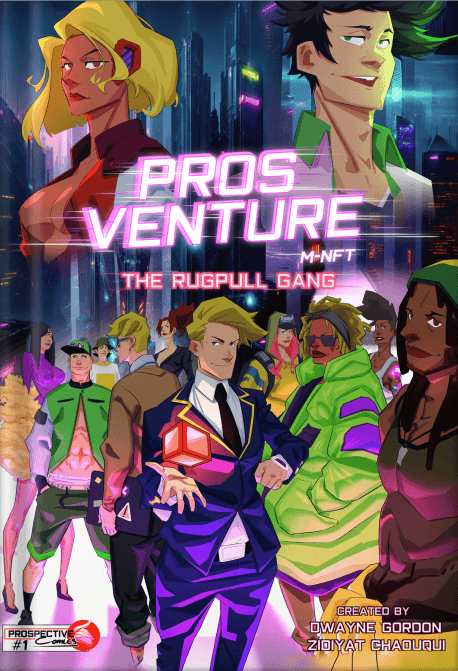
The Rugpull Gang is the first sense, told straight. It is a 24-page full-colour print comic — written by Dwayne Gordon, illustrated by Chaouqui Zidiyat — about a crew of crypto masterminds working the spaces between wallets. It debuted at the Frankfurt and Sharjah international book fairs in 2024.
It is a book. It ships in a box. You can buy it with a card, no wallet and no account required, and it will still be a comic in ten years regardless of what any chain is doing.
That was the point.