The Boxes Row
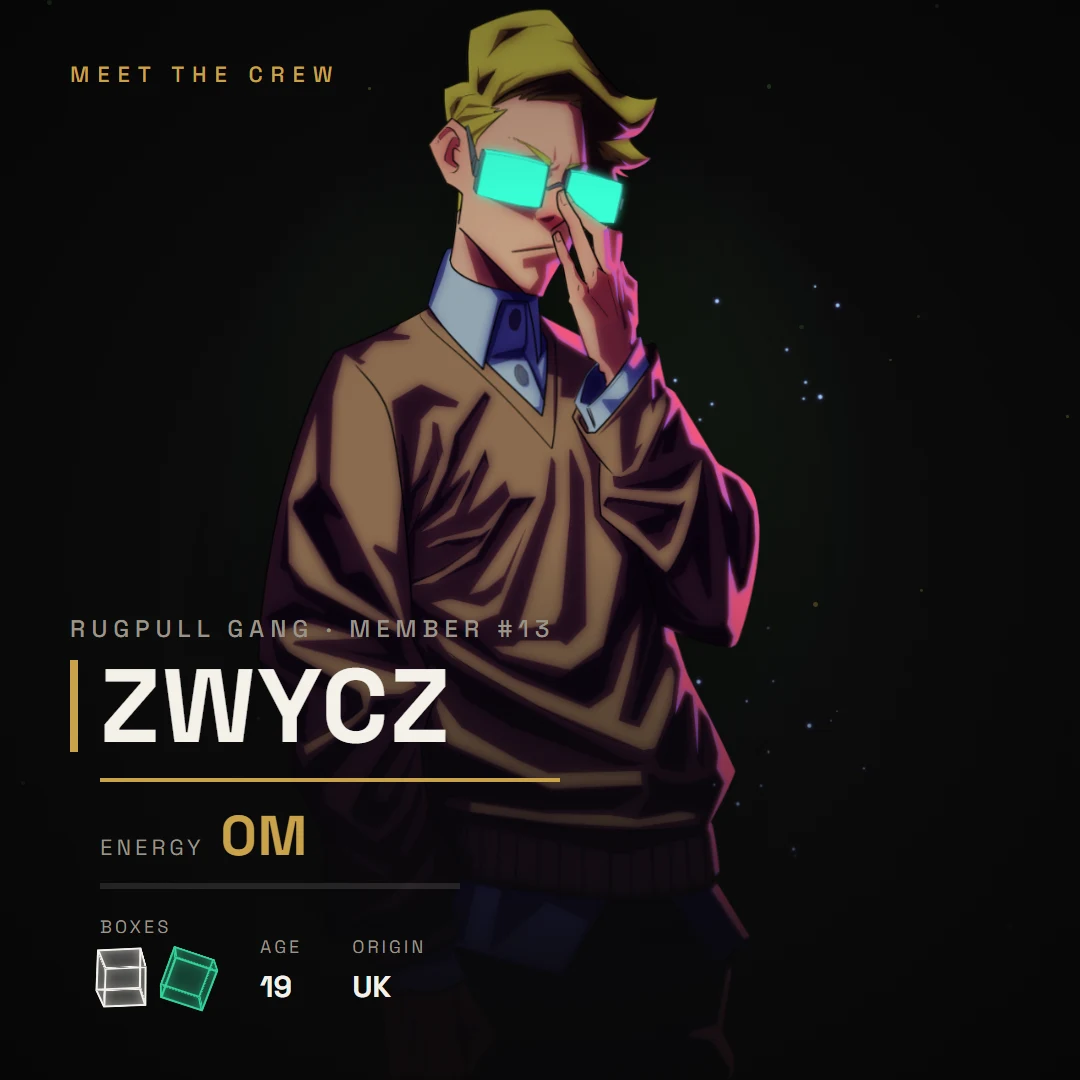
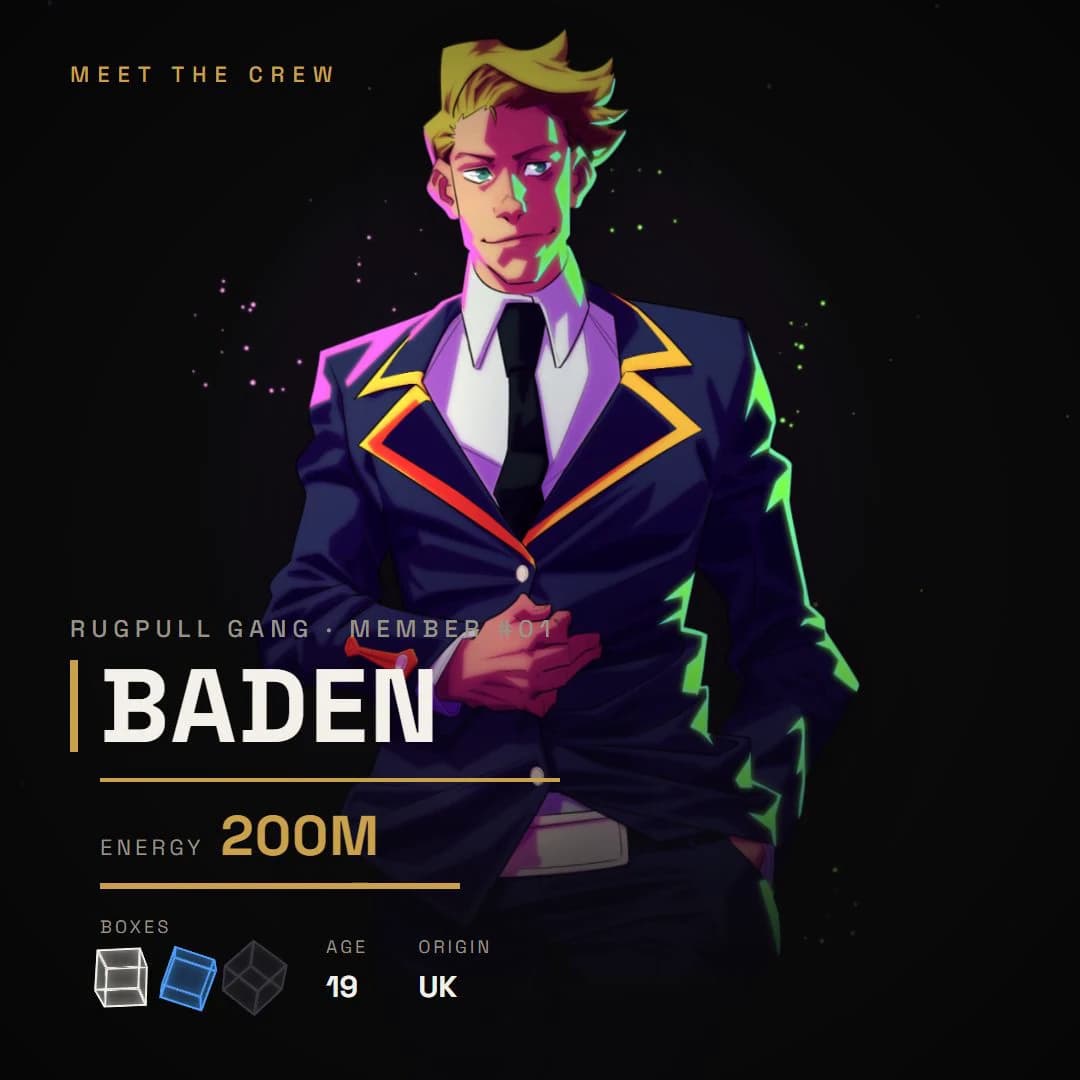
Every character card in the MEET THE CREW series follows the same layout: a portrait, a name, a role label, and a row of small colored squares sitting at the bottom edge. These squares are not shown on the character pages at proscomics.com. They do not appear inside the panels of the first issue itself. Their only appearance as DATA is on the cards themselves, which means a reader cannot go to the site and count them. The cards carry the numbers; the site does not display them.
The boxes do appear once more, though, and not as a statistic. There is a minute of film of them — each one alone, in a landscape the comic has never shown you.
The Count
Here is the roster, sorted by box count:
Three boxes
- Baden: white, blue, dark
Two boxes
- Gazali: white, blue
- Svet Wu: green, blue
- Sandy: red, blue
- Obake: white, green
- Prince: white, silver
- Elixir: red, blue
- Sambo: purple, green
- Ackee: white, green
- Wushi: white, green
- Sawyer: white, red
- Zwycz: white, green
One box
- Lala: white


That is thirteen members total. Eleven of them carry exactly two boxes. One carries three. One carries one. The distribution is too lopsided to be decoration.
If the boxes were random, we would expect a spread. Instead we have a wall of twos, a single peak at three, and a single drop to one. That is a pattern, not noise. Someone chose these numbers on purpose, and the purpose has not been revealed yet.
Two members sit outside the boxes entirely. Degen does not have a MEET THE CREW card in the series. The unnamed member does have a card, but its layout is different and it carries no boxes row. Both are the same two whose profiles on the character pages are redacted to asterisks. Only the thirteen listed above carry the boxes. The other two do not participate in the system.
The Colors
White appears most often: Baden, Gazali, Obake, Prince, Ackee, Wushi, Sawyer, Lala, Zwycz—nine out of thirteen members with boxes.
Blue next: Baden, Gazali, Svet Wu, Sandy, Elixir. Five.
Green: Svet Wu, Obake, Sambo, Ackee, Wushi, Zwycz. Six.
Red: Sandy, Elixir, Sawyer. Three.
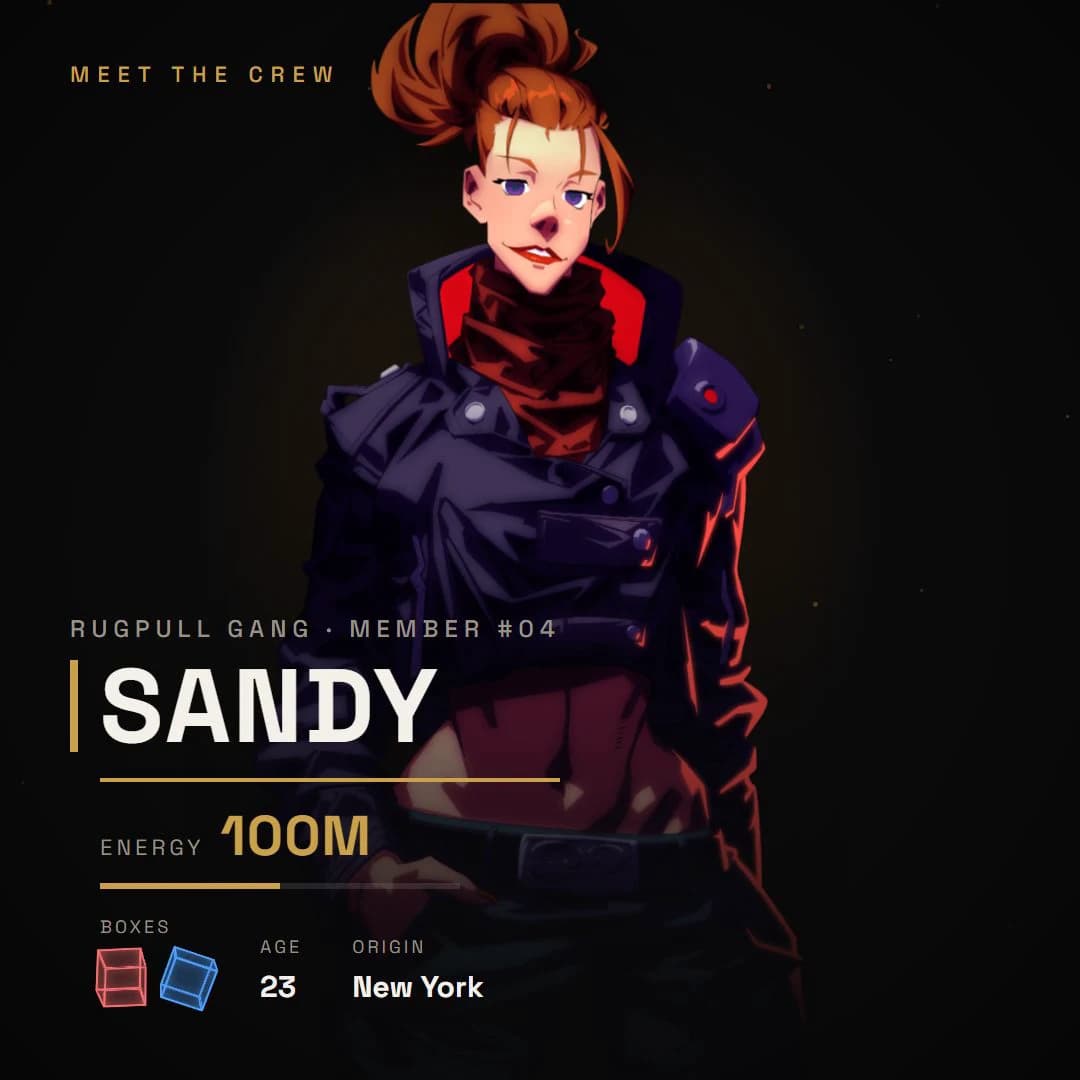
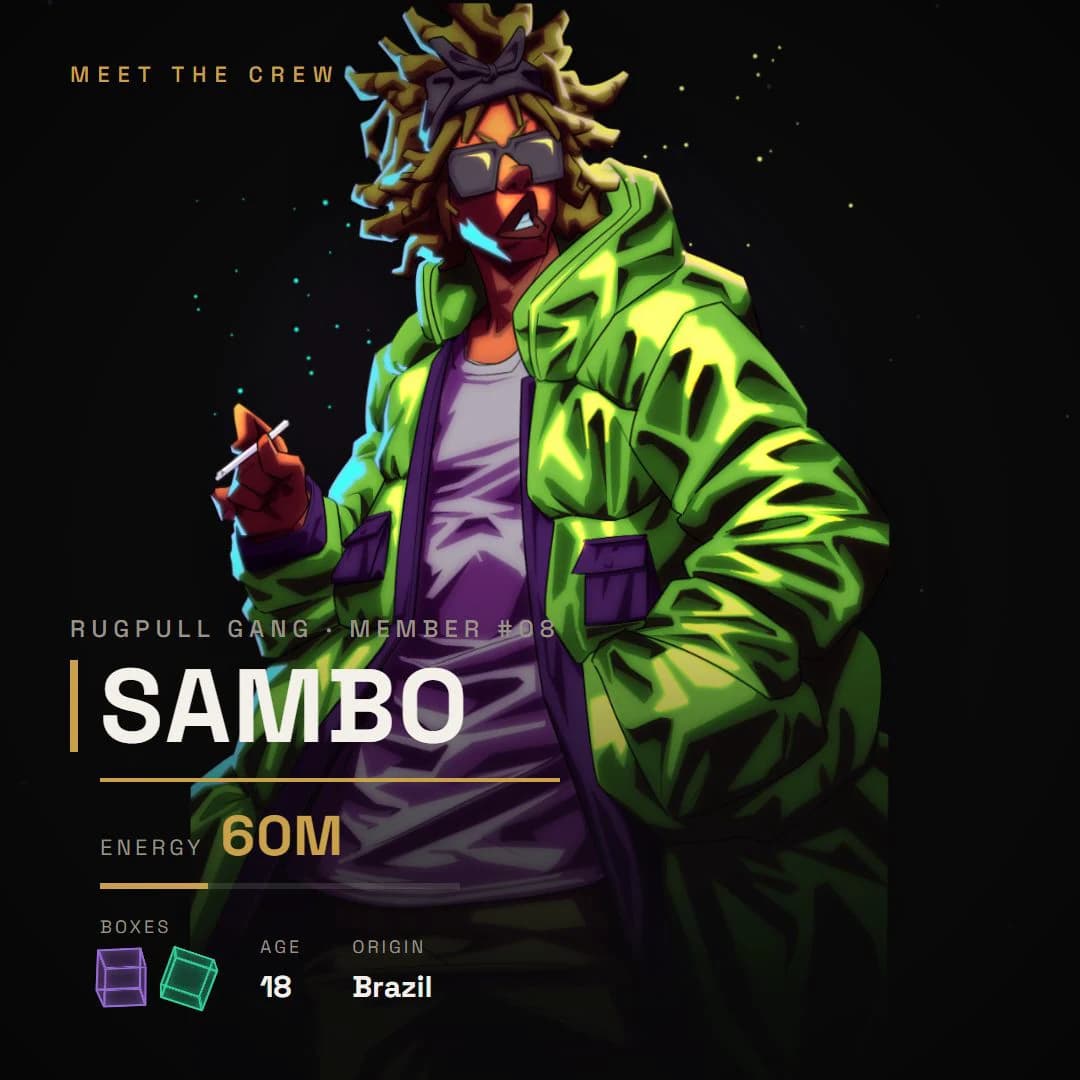

Purple, silver, and dark are singletons. Each appears exactly once. If there is a color code, white is almost certainly the baseline. The question is what the second color, and in Baden's case the third and the dark shade, adds. The cards do not say, and the first issue has not answered it yet. What we can say is that no color is random.
The Exceptions
Baden carries three. He is also member #01, the first entry on the character pages, and the only member whose count breaks upward. Whether that leadership explains the extra box, or the extra box marks him as leader, is unknown. Correlation is there. Causation is not.
Lala carries one. She is not a background character—she has a full card entry and a full profile on the site—but her count is exactly half the norm. That could mean a simpler role, or withheld information. The card gives no indication.
In a roster of thirteen with boxes, eleven match and two do not. That ratio suggests the exceptions are meaningful, not accidental.
Why It Matters
The boxes are not a puzzle you can solve from the site. They are not a detail you catch while reading the comic. They are a parallel channel, delivered only through the cards, visible only when the full set is gathered and compared. That delivery method is itself a signal. The storyteller has embedded a numerical code in a collectible object rather than in the narrative text. Whatever the boxes eventually mean, they will mean something that had to be counted outside the page.
Issue 1 gives no answers. It follows two strands that never meet: an unnamed woman riding east out of ruined Baltimore toward New Manhattan, and the Rugpull Gang already inside the city, working a packed venue while Zwycz runs something on a laptop that holds the crowd. She ends the book with her first sight of the city. "So this is New Manhattan." The gang is already there. The boxes are already on their cards. No one connects the two.
That separation is the point. The pattern is real, it is attached to every member who carries a card, and half of it has now been answered: the boxes are M-NFTs, and the count is an inventory. The other half — why the inventories differ, what the colours track, why two members hold nothing — is still waiting for the story to catch up. Until then the count stands: three, two, two, two, two, two, two, two, two, two, two, two, one.