The short version
Issue two of The Rugpull Gang is being drawn.
It is 32 pages, up from 24. It picks up directly from where issue one left off. The script is written, the page breakdowns are with the artist, and there is no release date — not because we are being coy, but because we would rather tell you nothing than tell you a date and move it.
That is the whole announcement. The rest of this is what we can say about the book itself, what we are deliberately not saying, and what is worth looking at again in issue one before the second one lands.
What issue two is about, in the only terms we can use
Issue one introduced a crew and a city and ended on a question nobody in the story is equipped to answer. Issue two is about the cost of asking it anyway.
The gang runs an operation. In issue one, that operation looks like a win. In issue two, the arithmetic catches up — there is a number on a screen that nobody wants to read out loud, and a decision gets made to go and fix it in the stupidest available way. Most of the book is that decision playing out.
What they find is not what they went looking for. That is as far as we will go.
The art is changing, on purpose
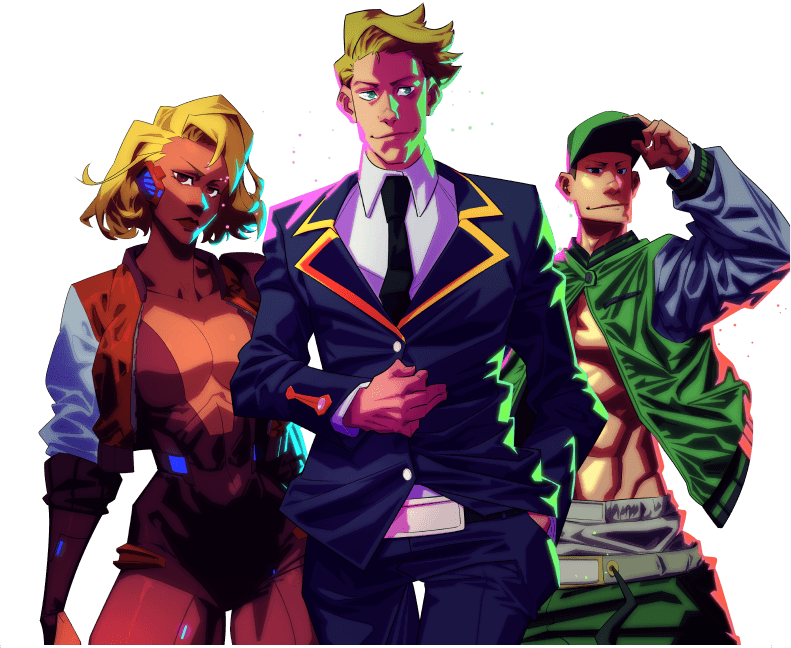
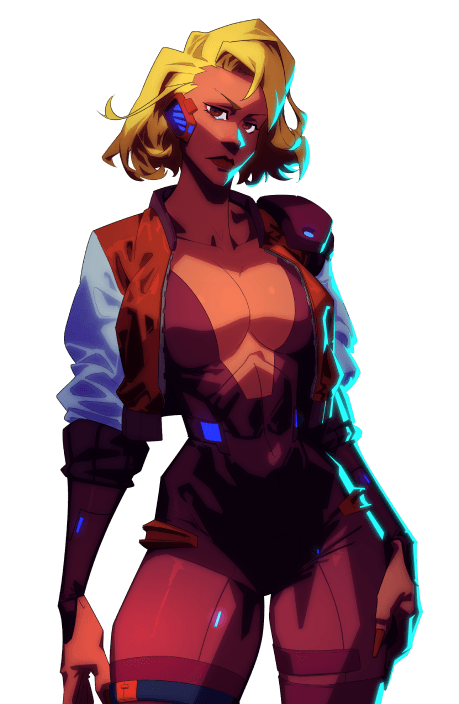
If you have spent any time on the character pages on this site, you have seen a style that issue one only partly used. Issue two moves toward it.
The character work is going harder in an anime direction — sharper silhouettes, more expressive faces, and a much stronger separation between the human cast and the machinery they ride. Issue one had to establish a world. Issue two gets to live in it, which means more room for faces and more room for the kind of panel that is just one person realising something.
The colour is also doing more work. Issue one used light to sell a city. Issue two uses it to tell you which of two very different things you are looking at, and a reader paying attention will be able to tell them apart before any character does.
Somebody does not come home
We are going to be straightforward about this, because it affects whether you want to read it.
Issue two has a real cost in it. One of the gang does not walk out of this book the way they walked in. It is not a fake-out, it is not resolved by the last page, and it is not played for shock — it is set up, it is earned, and it changes the group permanently.
We are not saying who. We are not saying how. If you would rather find out on the page, you already know everything you need to know, and you can stop reading here.
Three things to look at again in issue one
None of these are spoilers. All three pay off later.
Page one. Issue one opens with something coming through. Readers tend to treat it as an establishing image — a bit of atmosphere before the story starts. It is not atmosphere. Everything the second issue does with that figure assumes you remember the first panel she appeared in.
The bulls. The mechanical bulls in issue one are set dressing: they are in the arena, they fight, they are spectacular, the crowd loves them. Look at how they are handled between fights. Look at who touches them and how. The second issue has a page that only lands if you noticed.
Zwycz has an energy rating of zero. Every member of the gang carries a number on their character page, and twelve of them are in the tens or hundreds of millions. One of them is 0M. That is not a data-entry mistake and it has never been explained. Issue two does not explain it either, but it does put him in the one position in the story where it matters.
And if you have wondered why Degen and the unnamed character have nothing but asterisks on their profiles while everybody else has an origin, an age and a bio — that is the point. Those two are redacted because the reveal belongs to the story, not to a web page. One of them gets considerably less redacted in issue two.
Why there is no date
Twenty-four pages of full-colour comic art took as long as it took. Thirty-two will take longer.
We are a small operation. One writer, one illustrator, no publisher behind us setting a schedule, and a print-to-order pipeline that only starts once the book is actually finished. We could announce a month and then announce a different month, which is what usually happens, or we could tell you it is being drawn and tell you again when it is done.
We are doing the second one. When there is a date, it will be a date, not an estimate.
What to do in the meantime
Read issue one, if you have not. It is a complete 24-page story in its own right — it does not stop mid-sentence waiting for a sequel, and it is the only way to have the context that makes the second book work.
And have a proper look at the roster. Fifteen members, thirteen with full profiles, and the two blanks are blank on purpose. A surprising number of the questions issue two answers are already sitting there in plain sight.